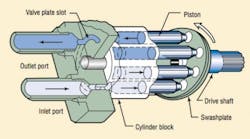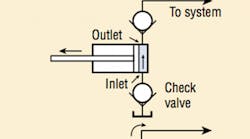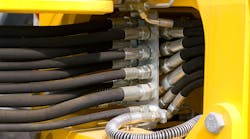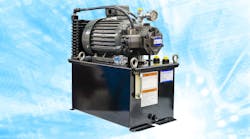

A hydraulic pump is a mechanical device that converts mechanical power into hydraulic energy. It generates flow with enough power to overcome pressure induced by the load.
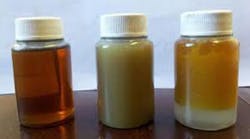
The most common source of system impairment is fluid contamination. Without proper preventive measures and fluid conditioning, component failure can result....More
Like compressed air, vacuum puts the atmosphere to work. But unlike compressed air, vacuum uses the surrounding atmosphere to create the work force....More
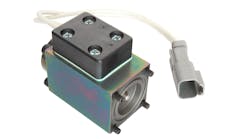
Manifolds provide a convenient means for locating multiple valves in a centralized location. Benefits include lower cost, more compact design, less leakage, and simpler maintenance....More
Methods of assessing fluid cleanliness have become more sophisticated and effective, but also easier and more convenient to use. Here's a summary of what's happening....More
In the age of microchips and personal computers, air logic can still provide an effective, efficient, and inexpensive means of control for certain pneumatic machines....More
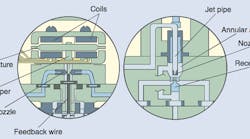
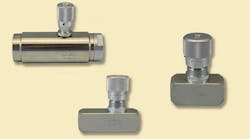
Flow-control valves include simple orifices to sophisticated closed-loop electrohydraulic valves that automatically adjust to variations in pressure and temperature....More